


0571-26692003
No. 181 Geyazhuang, Xihu District,Hangzhou, Zhejiang, P.R. China

Recently, researchers from the Tsientang Institute for Advanced Study, Zhejiang, in collaboration with the Institute of Physics, Chinese Academy of Sciences, and Songshan Lake Materials Laboratory, employed multiscale simulations to investigate the interplay between varying oxygen vacancy concentrations and the electronic structure of the HfO₂ dielectric layer. Combined with experiments utilizing an industry-compatible multi-step oxidation atomic layer deposition process, they successfully surpassed several key performance metrics and implemented this approach in two-dimensional molybdenum disulfide field-effect transistors.
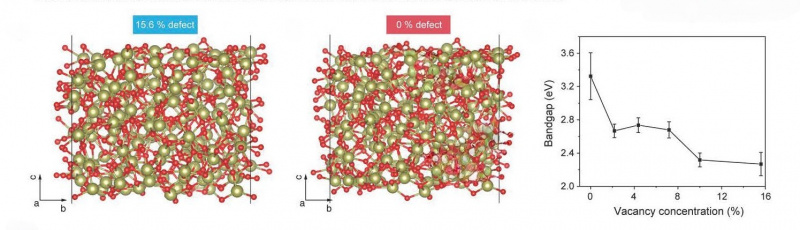
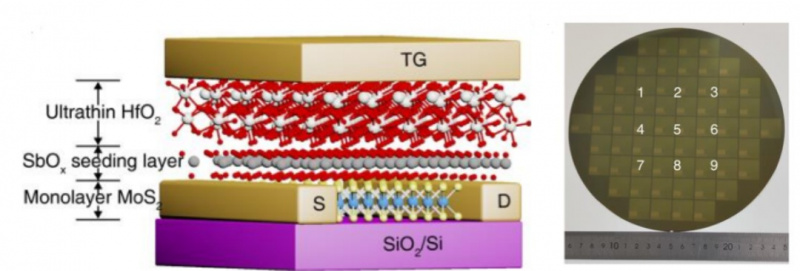
The research team constructed amorphous HfO₂ thin-film structures through molecular dynamics and, in conjunction with first-principles density functional theory (DFT) simulations, analyzed the modulating effect of oxygen vacancies on the band structure of the HfO₂ dielectric layer. The results revealed that reducing the oxygen vacancy concentration effectively widens the bandgap of the HfO₂ dielectric layer and diminishes the probability of defect-mediated breakdown path formation. This indicates that lowering the oxygen vacancy concentration is crucial for effectively restoring the breakdown strength and enhancing the dielectric properties of HfO₂. Based on these findings, a novel multi-step oxidation atomic layer deposition process was developed experimentally. By employing alternating oxidation steps using ozone and oxygen plasma, the oxygen vacancy concentration was reduced from 25.7% (achieved with conventional processes) to a nearly negligible level. This enabled the successful fabrication of high-quality hafnium oxide (HfO₂) dielectric thin films with an equivalent oxide thickness (EOT) as low as 2.5 Å. Leveraging this dielectric layer, high-performance HfO₂/MoS₂ field-effect transistors were successfully fabricated. This research validates the enabling value of computational simulation in advanced material development. This achievement signifies that the nation's expertise in advanced gate dielectric and 2D semiconductor integration has reached new heights, providing critical technological support for the development of energy-efficient and high-density integrated circuits.
This research was conducted collaboratively by Professor Guangyu Zhang from the Institute of Physics, Chinese Academy of Sciences, Associate Professor Lede Xian from the Tsientang Institute for Advanced Study, Zhejiang, and Distinguished Researcher Na Li from Songshan Lake Materials Laboratory. The findings were published on January 20, 2026,in Nature Communications(https://doi.org/10.1038/s41467-026-68584-0).


